Tuesday, June 19, 2012

Viroqua, Wisconsin

School's out for summer and we were off to the woods and streams in western Wisconsin. Sidie Hollow campground - the same one we took the ecology club to last year.  Beautiful spot...  oh, so buggy though this year.  A week later, I'm still consoling people that I don't have chicken pox...  I had a headnet on most of the time, but pulled it up to shoot pictures and spy birds.  They weren't black flies, but some kind of biting gnat.  We found out a little too late that vanilla extract wards them off.  

There is a dam with a small boomerang-shaped reservoir behind it. Campsites line a trout stream that leads into it.  Wayne runs the place with his wife and they have a bunch of bird-feeders near their motor home.  They always encourage me to get right up in their back yard and have a good look.  I'm glad because it feels weird peering through binocs with their trailer kitchen in the background and his wife staring out the window.  Brown Trout were caught although it's hard to sneak up on them when the water is this clear.  We haven't had much rain so far.  Maybe that's why no skeets.


I kept seeing this one-legged female red-winged blackbird.  She seemed to be getting along alright.


Cedar Waxwing

House Wren

Rose-breasted Grosbeak
Eastern Towhee
Brown Trout

Wednesday, May 9, 2012

Wooded Island?

I'm not sure why this place has remained off my birdar.  But it was certainly nice to tag along with the Chicago Audubon Society for the annual Illinois Spring Bird Count on Saturday morning. So nice I went back for more the next day.  


Warblers:
Yellow-rumped, Palm, Yellow, Black-and-white, Redstart, Common Yellowthroat, Wilson's, Magnolia, female Black-throated Blue, male Black-throated Green(first ever!)

Others:
Eastern kingbird, Baltimore oriole, Ruby-crowned kinglet, Warbling vireo, Amer. goldfinch, Song sparrow, White-throated sparrow, White-crowned sparrow, Red-bellied woodpecker, Brown-headed cowbird, Caspian tern, Coots, Green heron, Kingfisher, and then the usuals.

Monday, January 16, 2012

Willowbrook Wildlife Center!

Amazing place... Thank you to Nancy Kett for showing me around and being patient as I snapped photos. They have 80 native animals on display because they are too injured or human-habituated to release. And they have many more that they regularly rehabilitate in order to release back to the wild.

Saturday, October 8, 2011

Baby American Goldfinch foraging then demanding food...

8am bird hike with some nerds that know their birds. You could tell this baby (actually a juvenile) was trying to gather it's own seeds but ended up frustrated. The mom ignored it for a while as she filled up on Purple Coneflower seeds. Then came over and almost got pounced as she was trying to regurgitate the goods into junior's mouth! It's funny that juveniles like this one don't really look that young but they really are pretty helpless on their own. Look how special their feet are - designed to grip swinging stems of flower seedheads.
From North Pond w/ Chicago Ornithological Society
American Goldfinches have interesting aerial maneuvers as part of their mating rituals. They mate and nest much later in the season than most birds because they eat seeds and there are many more seeds available in the late summer and fall. From Wikipedia, info. about their nests:

"The nest is built in late summer by the female in the branches of a deciduous shrub or tree at a height of up to 10 meters (30 ft). The nest-building lasts approximately six days, during which time the female works in 10–40 minute increments. The male frequently flies with the female as she collects nesting materials, and though he may carry some materials back to the nest, he leaves its construction to the female. The outer shell of the nest is built of bark, weeds, vines, and grass.[20] The inside diameter of the finished nest is about 6.5 centimeters (2.5 in).[19] The rim is reinforced with bark bound by spiderwebs and caterpillar silk, and the cup is lined with plant down from milkweed, thistle, or cattail. The nest is so tightly woven that it can hold water, and it is possible for nestlings to drown following a rainstorm if the parents do not cover the nest.[14]"

Wood Ducks

Also seen at North Pond
From North Pond w/ Chicago Ornithological Society

Sunday, September 25, 2011

Trout hunting in Fennimore
Drove 3.5 hrs up to Fennimore, WI at 3am so we'd have a full Saturday there. I think I'd prefer to be well-rested next time :\ Saw some birds, not a ton. Had a staring contest with a woodchuck (groundhog). Trout were caught, but not by me. I'd rather see critters and take pics :)


The Cedar Waxwings were loving this cloud of midge flies? above them. You can't tell from the picture, but they are truly stunning birds. Check out the face mask... They are summer and winter residents, although may migrate if berries are less abundant.


You have to sneak up on the trout...


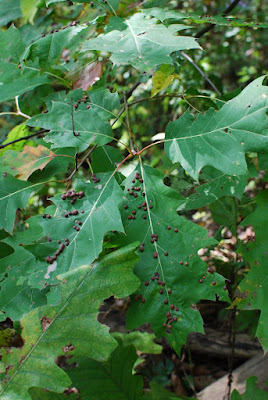
Wasp or fly larvae living inside galls..